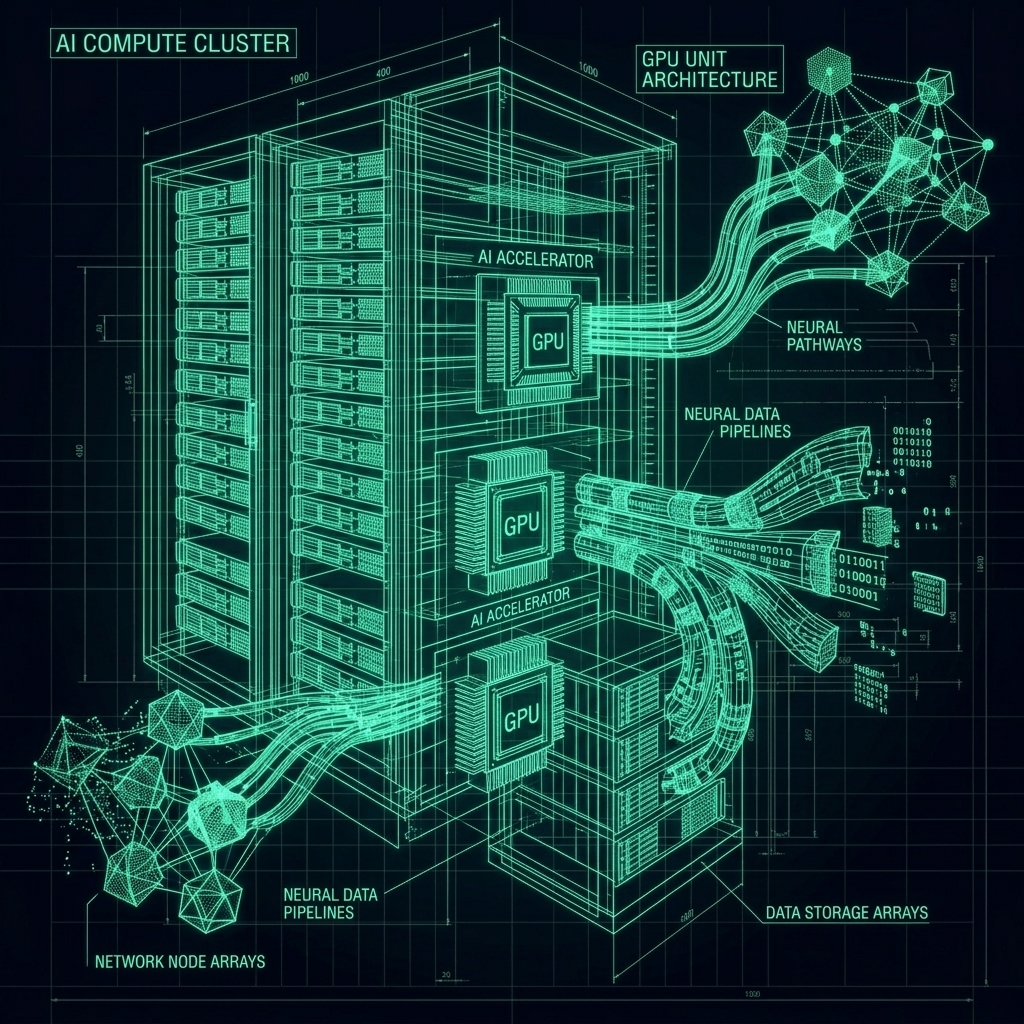
Deep reasoning models have moved from research curiosities to production infrastructure. Systems built on chain-of-thought architectures, such as DeepSeek R1 or Kimi K2 Thinking, can autonomously plan, code, and iterate across thousands of tokens. That capability introduces a security surface unlike traditional LLMs. When a model reasons over long contexts, invokes tools, and generates structured outputs, every layer of the stack becomes a potential target. Building secure deep reasoning systems requires hardening inputs, outputs, and the inference infrastructure itself.
Understand the Threat Model
Deep reasoning systems face amplified risks because of their agency. Prompt injection remains the primary concern, but the damage multiplies when the model has access to function calling, external APIs, or file systems. An attacker who hijacks the reasoning trace can redirect the model's goals, exfiltrate sensitive context, or trigger unauthorized tool use.
Long-context windows compound the problem. A reasoning model may process prior conversation history, retrieved documents, and system prompts across hundreds of thousands of tokens. A malicious instruction buried deep in a PDF or prior user message can resurface late in the reasoning chain. Additionally, data leakage through reasoning traces, where the model inadvertently outputs secrets from its context, is a real risk in multi-tenant environments.
Treat every token entering the context window as untrusted. Start with a hardened system prompt that defines explicit boundaries: what the model may do, which tools it can call, and what data it must never emit. Use delimiters to separate user input, retrieved content, and system instructions clearly.
For agentic workflows, implement input validation before any content reaches the model. Sanitize uploaded documents, strip suspicious metadata, and normalize text to reduce adversarial formatting. If your application retrieves external content via RAG, scan it for injection patterns such as role-play directives or fake system prompts.
When running on Oxlo.ai, you can enforce these boundaries through the standard chat/completions endpoint. Because Oxlo.ai is fully OpenAI SDK compatible, you can use the same system prompt and message array patterns you already rely on, with no client-side refactoring.
Deep reasoning models excel when they can call tools, but every tool is an attack surface. Apply the principle of least privilege. Each function should have a narrowly defined JSON schema, and your execution layer must validate every argument against that schema before acting. Never let the model construct raw SQL, shell commands, or unfiltered API paths.
Implement allowlists for external domains and operations. If the model requests a tool call that falls outside the expected scope, reject it and log the anomaly. For destructive operations, require human approval. The reasoning trace may look convincing, but autonomous code execution or data deletion should always pause for explicit consent.
Oxlo.ai supports function calling and JSON mode across its reasoning models, including DeepSeek R1 671B MoE and Kimi K2.6. You can define strict tool schemas in your request, and the model will return structured arguments that your backend can validate deterministically.
Validate Outputs and Reasoning Traces
Reasoning models often emit intermediate chain-of-thought tokens before their final answer. Decide early whether your application needs to expose these traces to end users. In many cases, the reasoning trace should remain server-side, parsed for audit purposes but hidden from the client to prevent information leakage.
Final outputs require the same rigor as inputs. Use JSON mode to constrain the model to valid structured responses, then validate the parsed object against a contract. If the model generates code, run it inside a sandboxed environment with restricted network access and resource limits. Treat generated code as untrusted until it passes static analysis and behavioral tests.
Streaming responses, available on Oxlo.ai, let you inspect tokens as they arrive. You can attach a middleware layer that aborts the stream if the output deviates from an expected schema or contains blocked patterns.
Secure the Inference Infrastructure
Your API keys and model endpoints are high-value targets. Rotate keys regularly, scope them to specific environments, and store them in secret managers rather than environment variables on application servers. All traffic to and from the inference provider should use TLS 1.2 or higher.
Network segmentation matters. The service that hosts your reasoning agent should not have direct access to production databases or internal APIs unless absolutely necessary. Place the inference client in a restricted subnet, and route tool calls through a dedicated gateway that enforces authentication and rate limits.
Oxlo.ai provides a single base URL at https://api.oxlo.ai/v1 with OpenAI SDK compatibility. That means you can drop it into existing Python, Node.js, or cURL workflows without rewriting client logic. Predictable request-based pricing also simplifies cost monitoring. Unlike token-based providers, where a long-context reasoning trace can spike costs unpredictably, Oxlo.ai charges one flat cost per request regardless of prompt length. For deep reasoning agents that iterate over lengthy documents or multi-turn tool loops, that predictability is a security benefit in itself. It removes the financial incentive to truncate context aggressively, which can lead to incomplete reasoning and exploitable edge cases.
Build Monitoring and Observability
Security is not a one-time configuration. You need continuous visibility into what your reasoning system is doing. Log every model request and tool invocation, including the reasoning trace if your architecture stores it. Correlate these logs with application events to detect anomalies such as repeated schema violations, unusual tool call sequences, or spikes in request volume.
Set up alerts for patterns that suggest probing or prompt injection attempts. For example, multiple requests containing delimiter-like strings or role-play phrases may indicate an attacker testing your boundaries. Rate limiting and per-user quotas prevent brute-force context stuffing.
Because Oxlo.ai uses request-based pricing, your cost metrics align directly with request counts. This makes it easier to spot anomalies. A sudden 10x increase in daily requests is immediately visible on your invoice, whereas token-based billing might hide that spike inside variable context lengths.
Choose Models with Security and Cost Predictability in Mind
Not every reasoning task requires the largest model. Match the model to the risk level of the operation. For high-stakes autonomous coding or multi-step agentic tasks, DeepSeek R1 671B MoE or GLM 5 offer deep reasoning capabilities. For faster, iterative reasoning with long context, DeepSeek V4 Flash supports a 1M context window and efficient MoE architecture. Kimi K2.6 provides advanced reasoning with vision and 131K context, useful when your inputs include screenshots or diagrams.
Oxlo.ai hosts these models behind a unified API with no cold starts on popular models. You can route sensitive tasks to a heavyweight reasoning model and lower-risk tasks to lighter endpoints without managing separate provider contracts.
Conclusion
Deep reasoning systems are powerful, but power expands the attack surface. Secure design starts with treating the model as an untrusted actor inside a hardened boundary. Sanitize inputs, restrict tool privileges, validate every output, and isolate the inference layer from critical infrastructure.
The platform you choose for inference is part of that security posture. Oxlo.ai offers OpenAI SDK compatible access to state-of-the-art reasoning models, with features like function calling, JSON mode, and streaming that let you implement strict controls. Its request-based pricing keeps long-context agent workloads predictable, so you never have to trade depth of reasoning for cost control. You can explore the pricing and model catalog at https://oxlo.ai/pricing.